How to Choose: Local Recording vs. Non-Recording Backup Camera Systems
Mon, Mar 23, 2026
Read in 2 minutes
Blind Spot Detecting
When upgrading your vehicle’s safety, one of the most critical decisions is whether you need a system that simply shows the view or one that captures it. Both have their merits, but the right choice depends on your specific driving habits.
Non-Recording Systems: For Real-Time Precision
Non-recording systems are the traditional choice for drivers who primarily need assistance with “active” tasks like hitching a trailer or reversing into a tight campsite. These systems focus on providing a high-definition, lag-free live feed. If your main goal is to eliminate blind spots during daylight driving and parking, a standard wireless system is a cost-effective and reliable solution.
Recording Systems: The Ultimate RV Security Camera
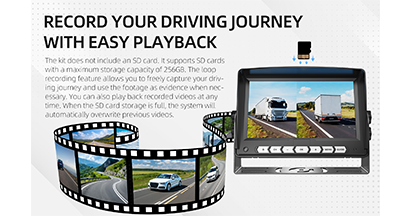
A backup camera with DVR (Digital Video Recorder) does more than just assist with parking; it acts as a comprehensive RV security camera. This is a game-changer for long-haul truckers and full-time travelers.
Accident Evidence: In the event of a collision or a “staged accident,” recorded footage is invaluable for insurance claims and liability protection.
Theft Deterrent: Many recording systems can monitor your vehicle even when parked, capturing footage of any suspicious activity around your rig.
Which One is Right for You?
Choose Non-Recording if you are a casual traveler who only wants to simplify the reversing process.
Choose Recording (DVR) if you manage a fleet, drive professionally, or park in unsecured areas and want 24/7 peace of mind.
At TULAKEEY, we offer both high-performance standard and DVR-integrated wireless systems designed for the toughest road conditions. Our recording models support multi-channel SD card storage, ensuring you never miss a moment of your journey.